Prion diseases or transmissible spongiform encephalopathies (TSEs)


Transmissible spongiform encephalopathies are fatal prion diseases affecting the central nervous system (brain and spinal cord). Affecting specific animal species-cattle, sheep, goats, felines, minks and deer-in addition to humans, they may be transmitted through food. They are not caused by conventional biological agents, bacteria, viruses, parasites or fungi, but by unconventional transmissible agents (UTAs) known as prions. Composed only of protein, prions are highly resistant to conventional inactivation procedures based on heat or chemical treatments.

Diseases transmissible through food

These diseases may, under certain conditions, be contracted following the ingestion of contaminated food. The conventional form of bovine spongiform encephalopathy (BSE) is linked to cattle being fed contaminated meat-and-bone meal. The pathogen behind BSE also causes variant Creutzfeldt-Jakob disease (vCJD) in humans following consumption of tainted food.

These diseases are characterised by:

- a long incubation period (usually several years, and up to 40 years in humans);
- the appearance of tissue lesions in the central nervous system, especially the formation of vacuoles in the neurons which account for the spongy architecture of these diseases;
- an accumulation of an abnormal, pathological form of normal host prion protein PrPc in the central nervous system and, to a lesser degree, in the lymph tissues and peripheral nerves. The pathological form results solely from a change in the three-dimensional structure of the protein. When misfolded, the prion protein becomes partially resistant to enzymatic degradation, and this new, pathological, form is named PrPsc or PrPres. This abnormal prion protein is the specific marker for these diseases.

In humans, TSEs include:

- Creutzfeldt-Jakob disease
First described in 1920, there are several different forms of this disease. The most common is sporadic, when no apparent cause can be identified. The genetic form is caused by mutations in the prion protein gene sequence, whereas iatrogenic transmission can result from contamination following a transplant, central nervous system surgery or use of tainted growth hormone.

- Variant Creutzfeldt-Jakob disease (vCJD)
Identified in 1996 among abnormally young patients with clinical signs differing from the sporadic forms of Creutzfeldt-Jakob disease, this TSE is the result of human contamination by bovine spongiform encephalopathy (BSE).

- other human TSEs
There have been cases of Kuru (Papua New Guinea), Gerstmann-Straussler-Scheinker disease and fatal familial insomnia (FFI).

In animals, TSEs include:

- Bovine spongiform encephalopathy (BSE)
First identified in 1986, this disease spread spectacularly throughout the United Kingdom, reaching a peak in 1992 with 37,280 cases identified that year alone. The disease affected the rest of Europe and some other countries-Japan, the United States and Canada-to a much lesser extent than the UK outbreak. Epidemiological research quickly found that the pathogen responsible for this disease was being transmitted through contaminated meat-and-bone meal used to feed cattle.

- Atypical BSE
BSE was long considered to be the result of infection by a single strain of unconventional transmissible agents, with the same PrPres biochemical signature for all recorded cases. In 2004, two new biochemical profiles were discovered and named atypical L-type or H-type BSE. Due to the few cases identified (recent discovery of the two types combined with low prevalence), there are few scientific data available on the distribution of prion in the tissues of these animals or the epidemiology of these two forms.

- Sheep and goat scrapie
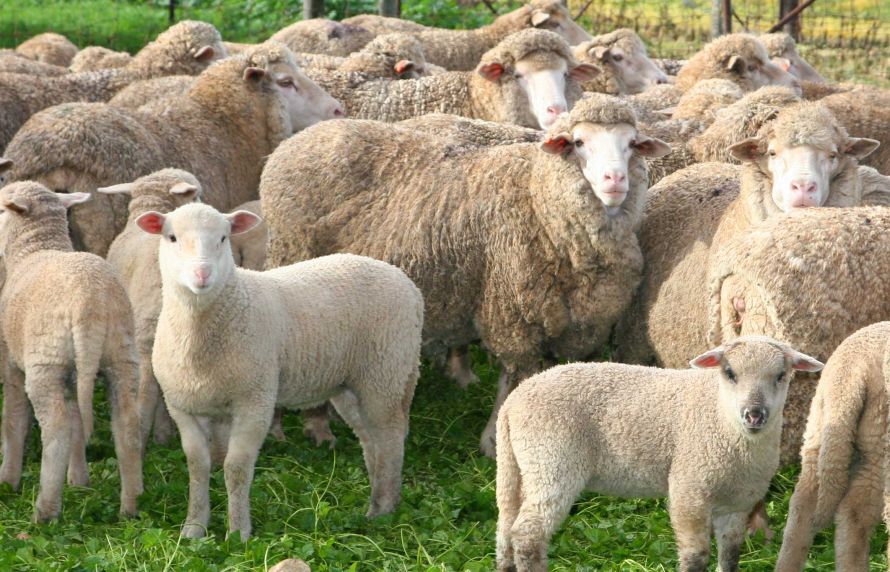
Scrapie is a TSE that affects both sheep and goats. It was described back in the 18th century and is currently found in numerous countries. In 1938 it was the first TSE found to be transmissible. Two forms are distinguished:

> Classical scrapie
Since the discovery of atypical scrapie, what has now been named “classical” scrapie covers a multitude of distinct strains. They may be distinguished biochemically, by screening for PrPres then analysing its properties, or by monitoring a laboratory animal inoculated with the strain, there being different incubation times and variations in the distribution of lesions within the central nervous system. Alleles that are relatively susceptible or resistant to the prion protein have been clearly identified for this disease in sheep, facilitating the selection of the most resistant animals as breeding stock.
Research into flocks infected by classical scrapie have shown that this
disease is transmitted in livestock production conditions both horizontally, from one animal to another, and vertically, from one generation to another. Transmission may be due to exposure to the tissues or output of incubating animals, including the placenta or milk.

> Atypical scrapie
Identified among sheep and goats some ten years ago, atypical scrapie has now been described in numerous countries since the establishment of active surveillance programmes.
The
biochemical properties of prion protein PrPres associated with this disease appear identical among all the animals identified in the field and are quite distinct from those of classical scrapie strains.
The pathogen causing this disease does
not appear to be (highly) contagious in livestock production conditions.
This disease does not react to genetic determinism in the same way as classical scrapie does.

- BSE in small ruminants
In 2005, a single case of BSE in a goat was identified in France. Despite mass screening designed to be exhaustive in 2006, no other case was detected on French territory. The prevalence of this disease in the small ruminant population therefore appears to be extremely low.

- Other animal TSEs
Identified cases of feline spongiform encephalopathy have resulted from transmission of the BSE agent through food. There are also cases of mink spongiform encephalopathy and, in North America, chronic wasting disease (CWD) among deer and elk.


>> Control measures


November 2011
Paquet hygiene
Maladies a prion ou EST Mesures de maitrise
Microbiological hazards
Microbiological risk assessment
Epidemiology
Enzymatic preparations
GMOs
Industries
Antibiotic resistance
Hygiene alimentaire
Nutrition Composition
Physico-chemical risk
Mineral water and drinking water
Studies and surveys on Food
Human food
Marquer cette page
Rechercher sur le site
homepage
English version
Version française
Consumers area
Maladies a prion ou EST
Opinions and/or reports related to this topic (mainly in french) :
Industries  Antibiotic resistance  Physico-chemical risk  Studies and surveys on food  Gmos  Nutrition  Enzymatic preparations  Microbiological hazards  Control¬†measures  Maladies a prion ou est mesures de maitrise  Maladies a prion ou est  Food hygiene & biological risks  Consumers area  Water  Hygiene package  Homepage  Epidemiology  Microbiological risk assessment